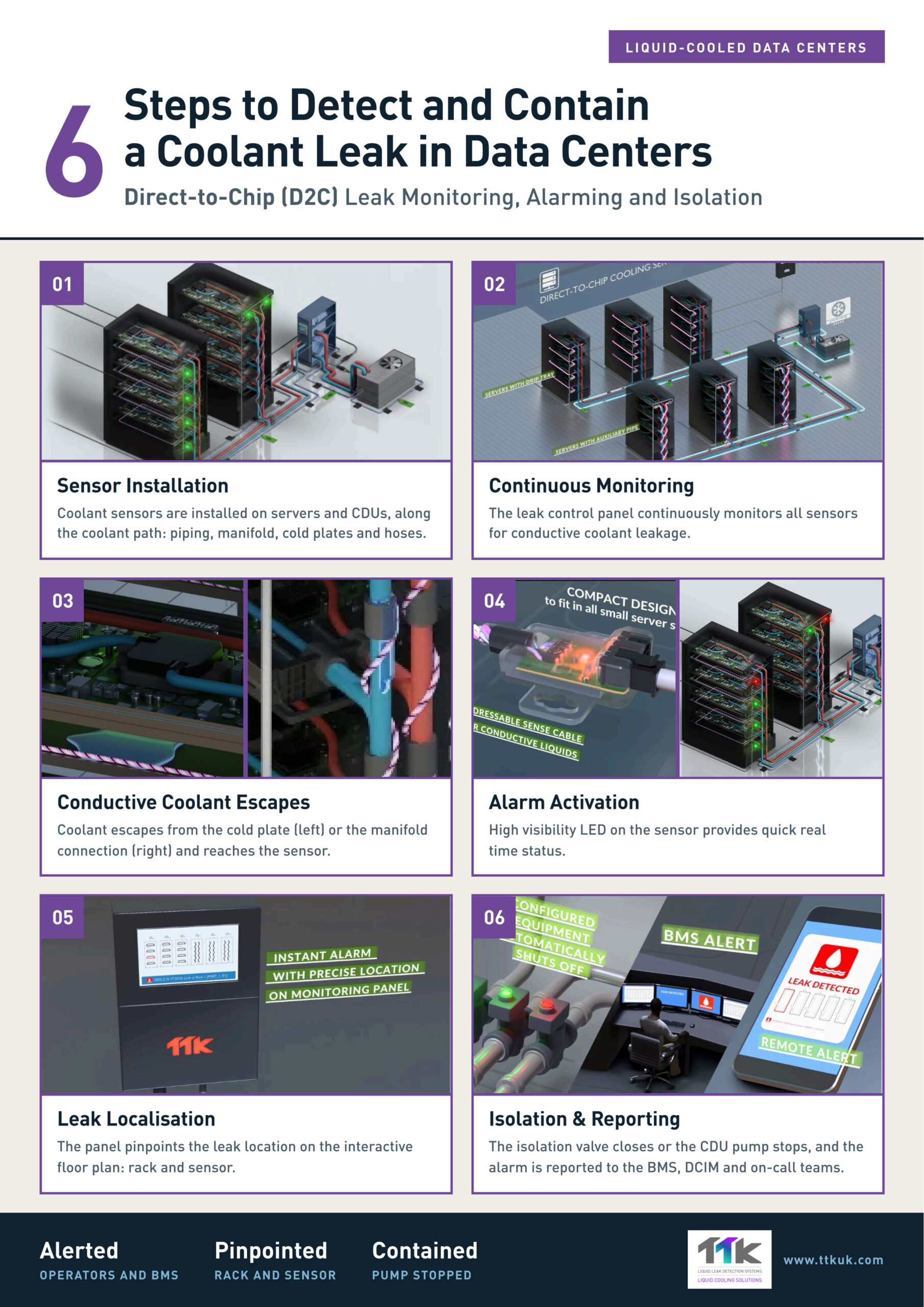
6 steps to detect and contain a coolant leak in data centers
Coolant Leaks in Direct-to-Chip Systems: Detection and Containment in Six Steps
Coolant leaks in direct-to-chip liquid cooling systems do not occur on a schedule, and they do not wait for a maintenance window. When a leak happens, response time determines whether it stays a minor incident or becomes a shutdown. Here is how a detection and containment system moves from first alert to full isolation, step by step.
From alert to containment: three stages
The response follows three stages: the system is alerted, the leak is pinpointed, and it is contained.
How it works
Drops of conductive coolant escaping a cold plate or manifold connection sets off a defined sequence of events.
The sense cable detects the fluid immediately upon contact. The monitoring panel identifies the exact leak location on the facility floor plan. The isolation valve closes, or the pump stops, to contain the fluid at its source. The alert is sent simultaneously to the BMS, the DCIM platform, and the on-call team.
Each of these steps happens before the leak can escalate into unplanned downtime.
Why this matters for data center operators
As direct-to-chip cooling adoption grows, so does the density of coolant connections per rack. Detection and containment infrastructure designed for this environment reduces the exposure window between a leak's onset and its resolution, protecting both equipment and uptime.
To learn more about how TTK's detection and containment systems can protect your liquid cooling facilities, contact our team.